


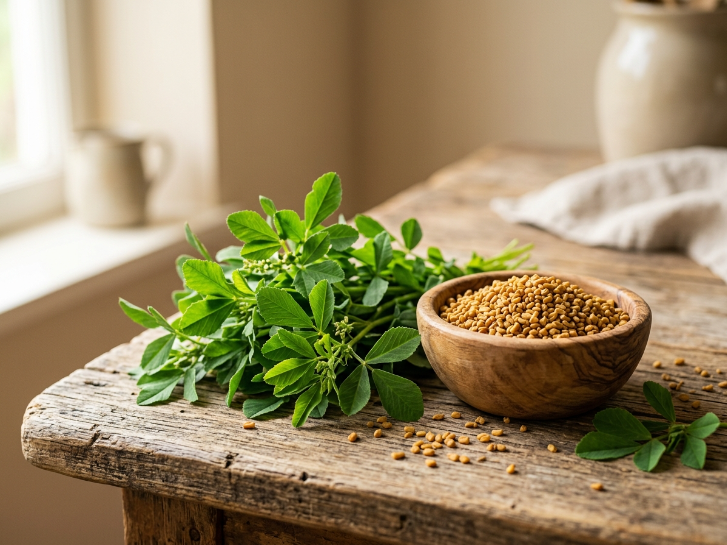
The word Foenegriek may look unfamiliar to many English-speaking readers, but it refers to fenugreek, a herb that has been used in cooking and traditional medicine for thousands of years.
- What Is Foenegriek?
- Foenegriek vs Fenugreek: Are They Different?
- Fenugreek Seeds: Why Are They So Important?
- How Does Fenugreek Work?
- Potential Fenugreek Benefits
- 1. It May Help With Blood Sugar Control
- 2. It May Support Digestion
- 3. It Has Been Studied for Breast Milk Supply
- 4. It May Have Effects on Cholesterol
- Common Fenugreek Uses
- How to Use Fenugreek
- Is Fenugreek Safe?
- What Does the Evidence Actually Say?
- Final Thoughts
Known scientifically as Trigonella foenum-graecum, fenugreek is especially valued for its small, aromatic seeds. These seeds are widely used as a spice and are also sold in teas, powders, capsules and other herbal products.
Interest in fenugreek has grown because of claims surrounding blood sugar, digestion, breastfeeding and other areas of health. Some research is promising, but the evidence isn’t equally strong for every claimed benefit.
So, what is Foenegriek, how does it work, and which fenugreek benefits are actually supported by research?
What Is Foenegriek?
Foenegriek is another name for fenugreek, rather than a completely different herb.
Fenugreek is a clover-like plant native to areas around the Mediterranean, southern Europe and western Asia. Its seeds have a distinctive smell and a slightly sweet, maple-like flavour.
The plant is used in several ways. Fresh or dried leaves can be used as a herb, while the seeds are commonly used as a spice.
In South Asian, Middle Eastern and North African cooking, fenugreek seeds can be found in spice blends, curries and other dishes. The leaves are also used in cooking, including dried preparations.
The plant has a long history in traditional medicine. According to the US National Center for Complementary and Integrative Health (NCCIH), fenugreek has been used medicinally for around 6,000 years.
Foenegriek vs Fenugreek: Are They Different?
No. Foenegriek and fenugreek refer to the same plant.
Fenugreek is the common English name, while “foenegriek” is a term used in some European-language contexts. If you’re searching for Foenegriek benefits online, most of the scientific research will be listed under fenugreek or its botanical name, Trigonella foenum-graecum.
That distinction matters because searching only for “Foenegriek” can make it seem as though there is very little research available.
There is actually a substantial body of research on fenugreek, although researchers have used different forms, doses and preparations of the plant.
Fenugreek Seeds: Why Are They So Important?
The fenugreek seeds are the part most often studied for potential health effects.
They contain several naturally occurring compounds, including fibre, saponins, flavonoids and other plant chemicals. Fenugreek seeds also contain mucilage, a type of soluble fibre that can absorb water.
These components may help explain why fenugreek has attracted attention in research on digestion and blood sugar.
The seeds can be used whole, ground into powder, soaked in water or included in food. Concentrated extracts are also available as dietary supplements.
However, these forms aren’t necessarily interchangeable. A culinary amount of fenugreek in a meal is quite different from a concentrated supplement.
How Does Fenugreek Work?
There isn’t one single mechanism that explains every possible effect of fenugreek.
Researchers believe different compounds in the plant may influence the body in different ways. Its fibre content, for example, may affect digestion and the absorption of carbohydrates.
Some research also suggests fenugreek may influence glucose metabolism and insulin-related processes. A recent systematic review and meta-analysis of 26 randomised controlled trials reported improvements in several blood sugar measures, including fasting glucose, post-meal glucose and HbA1c. However, the researchers also called for higher-quality studies to confirm these findings.
This is why it’s better to think of fenugreek as a plant with potential biological effects, rather than a proven treatment for a specific disease.
Potential Fenugreek Benefits
1. It May Help With Blood Sugar Control
Blood sugar is one of the most studied areas of fenugreek research.
Several clinical studies have investigated whether fenugreek seeds can help people with diabetes or elevated blood glucose. Earlier meta-analyses found reductions in fasting glucose and other blood sugar measures, although many of the included studies had limitations.
More recent research remains encouraging. A 2025 meta-analysis covering 26 randomised controlled trials found that fenugreek was associated with lower fasting blood glucose, two-hour post-meal glucose and HbA1c levels.
Still, the NCCIH says there isn’t enough high-quality evidence to establish fenugreek as an effective treatment for diabetes.
That distinction is important. Fenugreek may have a useful role as part of a diet, but it shouldn’t replace prescribed diabetes treatment.
2. It May Support Digestion
Fenugreek has traditionally been used for digestive complaints, and its seeds contain soluble fibre and mucilage.
These substances can interact with water in the digestive system and may contribute to feelings of fullness and changes in digestion.
However, strong clinical evidence for specific digestive conditions is limited. Some people may actually experience digestive side effects after taking larger quantities of fenugreek.
NCCIH lists diarrhoea, nausea and other digestive symptoms among possible side effects.
3. It Has Been Studied for Breast Milk Supply
One of the better-known traditional fenugreek uses is to encourage milk production during breastfeeding.
Fenugreek has been used as a galactagogue, meaning a substance intended to increase breast milk production. But research hasn’t produced a clear answer.
NCCIH says studies have produced mixed results, while the US National Library of Medicine’s LactMed database notes that some reviews have found a possible mild effect and others have found no good evidence that fenugreek increases milk supply.
Anyone considering concentrated fenugreek supplements while breastfeeding should speak with a healthcare professional, particularly because safety information at doses above normal food amounts is limited.
4. It May Have Effects on Cholesterol
Some research has examined fenugreek’s possible effects on cholesterol and other cardiometabolic markers.
A systematic review and meta-analysis published in 2020 found that fenugreek seed supplementation was associated with reductions in fasting blood sugar, HbA1c, total cholesterol and LDL cholesterol. The researchers also warned that differences between studies meant the findings should be interpreted cautiously.
This makes fenugreek an interesting area for further research, but it isn’t enough to recommend fenugreek as a cholesterol-lowering treatment.
Common Fenugreek Uses
Fenugreek is used both as a food ingredient and as a traditional herbal product.
Common forms include:
- Whole fenugreek seeds
- Ground fenugreek powder
- Fresh fenugreek leaves
- Dried fenugreek leaves
- Fenugreek tea
- Capsules and extracts
- Spice blends and cooking preparations
The fenugreek herb is particularly common in South Asian cooking. The leaves and seeds have different flavours and culinary uses.
For everyday cooking, fenugreek seeds can be toasted lightly before being added to dishes. This can bring out their nutty, slightly bitter and aromatic flavour.
How to Use Fenugreek
For most people, the simplest way to use fenugreek is as a food ingredient.
Fenugreek seeds can be added to curries, lentil dishes, vegetable recipes and spice mixtures. The leaves can also be used fresh or dried to add a distinctive flavour.
Some people soak the seeds in water or prepare fenugreek tea. Others use powdered seeds or supplements.
There’s no universally established dose for using fenugreek for health purposes. Studies have used widely different preparations and quantities, which makes it difficult to translate research findings into one standard recommendation.
If you’re considering a concentrated supplement rather than normal food use, it’s sensible to check with a doctor or pharmacist first.
Is Fenugreek Safe?
Fenugreek is generally considered safe when consumed in the amounts normally found in food.
Larger amounts can be different. Possible side effects include digestive problems such as diarrhoea and nausea. Fenugreek can also cause allergic reactions in some people, and large doses may lower blood sugar too much.
There are also important pregnancy considerations.
NCCIH advises against using fenugreek in amounts greater than those found in food during pregnancy because it has been linked with an increased risk of birth defects in animal and human data.
People taking medication should also be cautious. Herbal products can interact with medicines, and fenugreek’s potential effect on blood sugar could be particularly relevant for people taking diabetes medication.
What Does the Evidence Actually Say?
The biggest takeaway from current research is that fenugreek shows potential, but it isn’t a cure-all.
There is relatively encouraging evidence around blood sugar control, particularly in people with diabetes, but researchers continue to highlight limitations in study quality and differences in preparations and doses.
Evidence for breastfeeding, menstrual symptoms and other traditional uses is less conclusive. NCCIH says there isn’t enough high-quality evidence to determine whether fenugreek is useful for diabetes or menstrual cramps, and results on milk supply are mixed.
That doesn’t mean the herb has no value. It means consumers should separate traditional use and early research from established medical treatment.
Final Thoughts
Foenegriek is fenugreek, a long-used culinary and medicinal herb whose seeds have attracted considerable scientific interest.
The most promising research currently centres on blood sugar and some cardiometabolic measures. Other popular claims, including increasing breast milk supply, remain uncertain.
For most people, using fenugreek as part of normal cooking is a straightforward way to enjoy the herb. Concentrated supplements deserve more caution, particularly during pregnancy, breastfeeding or when prescription medicines are involved.
As with many herbal products, the sensible approach is neither to dismiss fenugreek nor to treat it as a miracle remedy. The evidence suggests potential benefits, but more robust research is still needed to understand exactly when and how it works.
FAQs
What is Foenegriek?
Foenegriek refers to fenugreek, the herb scientifically known as Trigonella foenum-graecum. Its seeds and leaves are widely used in cooking and traditional medicine.
Is Foenegriek the same as fenugreek?
Yes. Foenegriek and fenugreek refer to the same plant. Most medical and scientific research uses the name fenugreek.
What are the main fenugreek benefits?
Research has mainly examined possible effects on blood sugar, cholesterol and breastfeeding. Evidence is strongest for potential blood sugar effects, but researchers say more high-quality studies are needed.
Can you eat fenugreek seeds?
Yes. Fenugreek seeds are commonly used as a culinary spice. They can be used whole or ground and are found in many traditional dishes.
Can fenugreek lower blood sugar?
Research suggests it may lower blood glucose in some people, particularly those with diabetes. However, it shouldn’t replace prescribed diabetes medication or medical advice.
Is fenugreek safe during pregnancy?
Fenugreek in amounts greater than those normally found in food isn’t considered safe during pregnancy. Anyone who is pregnant should speak with a healthcare professional before using fenugreek supplements.