


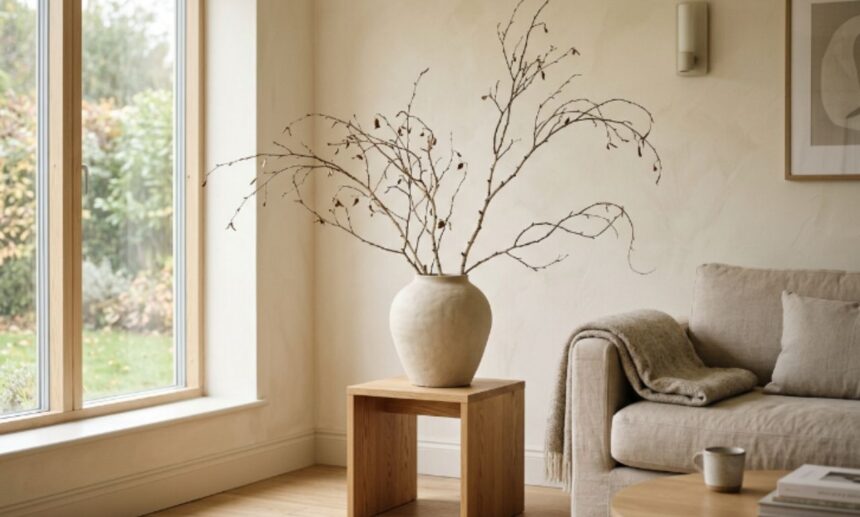
A few bare branches in a simple vase might not sound like a major interior design idea. Yet this understated look has become increasingly visible across Scandinavian-inspired home décor, particularly among people drawn to natural materials and minimalist interiors.
- What Is Pyntekvister?
- Pyntekvister Meaning and Origin
- Why Are Decorative Branches So Popular?
- What Types of Pyntekvister Can You Use?
- How to Style Pyntekvister at Home
- Pyntekvister and Scandinavian Interior Design
- Are Pyntekvister Sustainable?
- Where Can You Find Pyntekvister Online?
- Pyntekvister Explained in Simple Terms
- Final Thoughts
- FAQs
The word Pyntekvister is used to describe decorative twigs or branches arranged as part of a home display. The idea is remarkably simple: instead of filling a room with ornaments, use the shape, texture and natural character of branches to create visual interest.
The term itself has a straightforward linguistic basis. In Norwegian, pynte means to decorate or make something more attractive, while kvist means a small branch or twig. The plural form kvister means twigs. Danish uses the same basic words, with pynte meaning to decorate and kvist referring to a twig.
That makes the literal meaning of Pyntekvister much less mysterious than some online descriptions suggest. It is essentially decorative branches.
What Is Pyntekvister?
Pyntekvister refers to branches or twigs used deliberately as decorative elements, usually indoors.
They can be placed in:
- Tall ceramic or glass vases
- Floor-standing containers
- Dining table arrangements
- Shelves and sideboards
- Hallway displays
- Seasonal decorations
- Wall arrangements
The branches may be completely natural, dried, preserved or artificial. Some arrangements are deliberately sparse, using only a few stems. Others incorporate flowers, leaves, lights or small seasonal ornaments.
The appeal is largely visual. A branch has an organic shape that can add height and texture without making a room feel crowded.
This is particularly suited to minimalist interiors, where a small number of carefully selected objects often work better than a large collection of decorative pieces.
Pyntekvister Meaning and Origin
The simplest explanation of the Pyntekvister meaning comes from the two words behind it.
In Norwegian, pynte means “to decorate”, while kvist means “twig” or a small branch. The Norwegian plural is kvister. Danish has closely related terminology, with pynte meaning “to decorate” and kvist meaning “twig”.
So, when people search for Pyntekvister definition, “decorative twigs” or “decorative branches” is the most useful plain-English explanation.
There is a complication, however. Online articles don’t always describe the term consistently. Some recent pages have presented Pyntekvister as a craft technique involving paper weaving or handmade objects. Those descriptions don’t match the straightforward Norwegian and Danish word meanings supported by dictionary sources.
For readers trying to understand the term, the safer interpretation is therefore decorative branches rather than a specific weaving technique.
Why Are Decorative Branches So Popular?
The idea fits naturally with several design preferences that have become popular in recent years.
One is the continuing interest in Scandinavian-style interiors. Nordic-inspired rooms often favour simple shapes, natural materials, restrained colours and uncluttered spaces.
Branches fit that aesthetic almost perfectly.
A tall arrangement can fill an empty corner without introducing another bulky piece of furniture. A few thin twigs can add movement to an otherwise flat shelf. Dried branches can also stay on display for a long time without the maintenance associated with fresh flowers.
There is another practical advantage: you don’t necessarily need an expensive arrangement.
A suitable fallen branch from your own garden, used responsibly, can become part of a display with little more than a suitable vase. Florists, garden centres and home décor retailers also sell dried and decorative branches.
What Types of Pyntekvister Can You Use?
There isn’t one official type of branch that qualifies as Pyntekvister. The choice depends on the look you want.
Birch branches
Birch has a naturally pale appearance and works particularly well with neutral Scandinavian interiors. Bare birch stems can provide height without looking visually heavy.
Willow
Willow branches often have interesting curves and can be used when you want a softer, more organic arrangement.
Flowering branches
Cherry, apple and similar flowering branches can introduce colour during spring. They’re useful when the goal is to make the arrangement feel seasonal rather than permanently minimalist.
Eucalyptus and leafy stems
Eucalyptus brings muted green tones and more foliage into the display. It can work particularly well when bare branches feel too stark.
Dried branches
Dried stems are among the easiest options for low-maintenance decorating. Their shapes and textures can remain attractive long after fresh foliage has disappeared.
Artificial branches
Artificial versions offer another option for people who want the look without watering, shedding or seasonal replacement.
The important point is that Pyntekvister isn’t defined by one particular tree. The decorative use of branches is the central idea.
How to Style Pyntekvister at Home
You don’t need a large house or a designer interior to use the look.
Start with the vase. A simple ceramic, stoneware or clear-glass container generally works well because it doesn’t compete with the branches.
Then consider proportion.
Tall branches usually look better in a tall vase, while shorter stems can work on a dining table or shelf. Avoid cutting every branch to exactly the same length. Slight differences create a more natural silhouette.
A useful approach is to let the branches retain their original curves rather than forcing them into a perfectly symmetrical arrangement.
Keep the arrangement simple
One common mistake is adding too much.
If the branches already have interesting shapes, they don’t need to be surrounded by numerous decorative objects. A few stems can often create more impact than a tightly packed bundle.
Match the room
In a neutral living room, darker branches can provide contrast. In a room with stronger colours, pale birch or light dried stems may create a calmer balance.
Change it seasonally
The same vase can remain in place while the branches change.
Bare stems can create a winter look, flowering branches can introduce spring colour, and leafy stems can give an arrangement a fresher appearance later in the year.
Pyntekvister and Scandinavian Interior Design
The connection with Scandinavian design makes sense, but it is worth avoiding overly dramatic claims about its cultural history.
There are plenty of online descriptions suggesting that Pyntekvister represents an ancient Scandinavian ritual or carries specific symbolic meanings. Such claims aren’t consistently supported by reliable sources.
What can be established more comfortably is the linguistic meaning and the way decorative branches fit the broader visual language of Nordic interiors.
Natural materials, uncluttered spaces and seasonal changes are all familiar elements of Scandinavian-inspired decorating. Decorative branches can provide those qualities without requiring a complicated decorating scheme.
The result is understated rather than showy.
Are Pyntekvister Sustainable?
They can be, but sustainability depends on how the branches are sourced.
Using naturally fallen branches or suitable garden trimmings can be a low-waste option. Dried branches can also remain useful for a long period, reducing the need to replace decorations frequently.
However, not every commercially sold decorative branch should automatically be described as sustainable. Artificial branches may be made from plastics or other manufactured materials, while imported natural products can involve packaging and transportation.
If sustainability is a priority, locally sourced natural branches that can be safely collected are a more straightforward choice.
Never cut branches from someone else’s property or protected trees without permission.
Where Can You Find Pyntekvister Online?
The term Pyntekvister online is still relatively niche compared with more familiar searches such as “decorative branches”, “dried branches” or “artificial stems”.
That means shoppers may have better results using broader search terms.
Try searches such as:
- Scandinavian decorative branches
- Dried decorative branches
- Natural twigs for vase
- Birch branches for home décor
- Nordic vase arrangement
- Artificial decorative branches
- Dried botanical stems
Several recent online articles also use Pyntekvister as a search-friendly label for this broader category of branch-based decoration.
Pyntekvister Explained in Simple Terms
If you’ve been wondering what is Pyntekvister, the answer is actually quite simple.
It isn’t necessarily a special product, complicated craft or particular type of vase arrangement.
Pyntekvister is best understood as decorative twigs or branches used to style a space.
The Scandinavian connection comes from the language itself and from the way natural, understated materials fit Nordic-inspired interiors. The modern version can be as simple as a few bare branches in a ceramic vase or as elaborate as a seasonal arrangement with flowers and ornaments.
That’s perhaps the reason the idea continues to attract attention. It doesn’t require much.
A branch, a vase and a little thought can be enough to change an otherwise empty corner.
Final Thoughts
Pyntekvister may sound like a specialist Scandinavian design term, but its basic meaning is refreshingly straightforward.
It describes the use of decorative branches and twigs as part of an interior display. The style works because branches bring natural shapes, height and texture into a room without creating the visual clutter associated with heavier decoration.
For anyone interested in minimalist or Scandinavian-inspired interiors, it’s an easy idea to experiment with. And unlike many short-lived décor trends, the basic concept doesn’t depend on buying a particular product or following a strict formula.
Sometimes, a few branches really are enough.
FAQs
What does Pyntekvister mean?
Pyntekvister generally refers to decorative twigs or branches used to add a natural element to interior décor. The term comes from Scandinavian language roots associated with decorating and twigs or branches.
What is Pyntekvister used for?
Pyntekvister can be used in vases, table arrangements, shelves, hallways and empty corners. The branches add height, texture and a natural feel to a room.
Is Pyntekvister a Scandinavian trend?
Yes. Decorative branches fit well with Scandinavian-inspired interiors, which often emphasise natural materials, simple forms and uncluttered spaces.
Can I use real branches for Pyntekvister?
Yes. Naturally fallen branches or suitable garden trimmings can work well. They should be clean, dry and free from insects or signs of decay before being brought indoors.
Can Pyntekvister be used all year round?
Yes. Bare branches can create a minimalist winter look, while flowering or leafy branches can introduce seasonal colour during spring and summer.
Is Pyntekvister the same as dried flowers?
Not exactly. Dried flowers are usually flowers that have been preserved after drying, while Pyntekvister focuses specifically on decorative twigs or branches. The two can also be combined.
Where can I buy Pyntekvister online?
Because the term is relatively niche, shoppers may find more options by searching for terms such as “decorative branches”, “dried branches”, “Scandinavian branches” or “Nordic vase décor.”